Advanced wound care for the ulcer that hasn’t healed despite everything you’ve tried
You’ve been to the wound care clinic. You’ve done the debridement, the dressings, the compression. Weeks have turned into months. The wound looks the same or worse. Standard wound care manages wounds. It doesn’t restart healing that has stalled. Advanced wound care uses regenerative biologics to deliver growth factors, collagen, and signaling molecules directly to the wound bed. The same science that repairs joints can close wounds.

Biologic wound therapy that restarts stalled healing
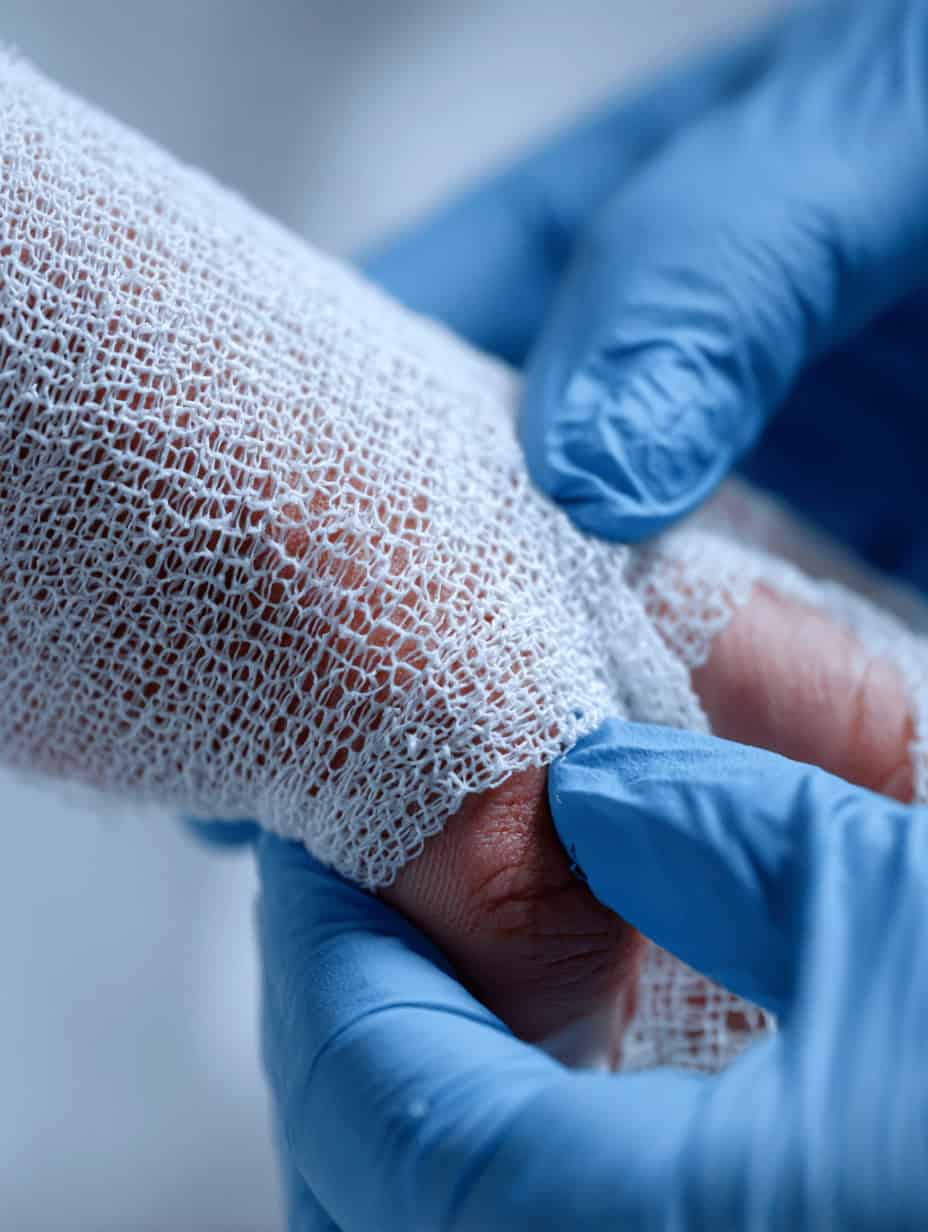
Advanced wound care applies regenerative biologics directly to chronic wounds. These aren’t standard dressings that cover and protect. They’re biologically active tissues containing growth factors, extracellular matrix proteins, and anti-inflammatory compounds that restart the wound healing cascade. When your body has stopped healing on its own, biologics provide the signals and building blocks to resume repair.
Growth factors that signal repair
Chronic wounds stall because normal healing signals have broken down. Biologic wound treatments contain platelet-derived growth factor, epidermal growth factor, and other signaling molecules that tell cells what to do: proliferate, migrate, build new tissue. They restart communication your wound has lost.
Scaffold that supports tissue regeneration
Healing requires structure. Biologic wound therapies provide extracellular matrix proteins, including collagen, that serve as scaffolding for new tissue growth. Cells can migrate into this matrix and begin rebuilding. Without this scaffold, new tissue has nowhere to anchor.
Is advanced wound care right for you?
When standard wound care stops working
You have a diabetic ulcer that won’t close
Diabetic foot ulcers are notoriously difficult to heal. Poor circulation, neuropathy, and impaired immune response create conditions where wounds stall indefinitely. Studies show biologic wound therapies achieve 77-98% wound closure rates in diabetic ulcers compared to 8-55% with standard care alone. The difference is dramatic.
Your venous or arterial ulcer has persisted for months
Leg ulcers caused by venous insufficiency or arterial disease often resist standard treatment. Compression helps but doesn’t always close wounds. Biologic therapies provide the growth factors and matrix proteins these wounds lack. Ulcers that have been open for months can finally progress toward closure.
Post-surgical or traumatic wounds aren’t healing as expected
Sometimes wounds that should heal don’t. Surgical incisions that dehisce. Traumatic injuries that stall. Pressure ulcers that won’t close despite proper offloading. When a wound fails to progress through normal healing stages within 4-6 weeks, biologic intervention can restart the process.
Advanced wound care has requirements
If your wound has active infection, the infection must be addressed first. If underlying circulation problems haven’t been evaluated, that comes before biologics. If you’re unable or unwilling to follow wound care protocols between visits, advanced treatments won’t help. We screen every patient to ensure biologic therapy is appropriate.

What to expect from advanced wound care
1. We evaluate your wound and identify why it isn’t healing
Not all non-healing wounds have the same cause. Diabetes, vascular disease, pressure, infection, nutritional deficiencies, and other factors all contribute. We assess your wound, review your history, and identify barriers to healing. Understanding the cause guides treatment selection.
2. Biologic tissue is applied directly to the wound bed
After proper wound bed preparation, biologic membrane or tissue is applied directly to your wound. This places growth factors, collagen, and matrix proteins in direct contact with the area that needs to heal. The application is painless and takes minutes.
3. Weekly treatments continue until wound closure
Most patients require multiple applications over several weeks. Each treatment delivers fresh biologics to the wound bed, sustaining the healing signals. We monitor progress and adjust the treatment plan as your wound responds. Healing that has stalled for months often progresses rapidly once biologics are introduced.
Conditions we treat with advanced wound care
We use regenerative biologics to treat chronic wounds that haven’t responded to standard care. The same quality tissue products we use for joint regeneration can restart healing in wounds that have stalled. If your wound has been open for more than four weeks despite treatment, you may be a candidate.
Diabetic Foot Ulcers
The most common cause of non-traumatic lower limb amputation. Diabetic ulcers often resist standard treatment due to impaired circulation and cellular dysfunction. Biologic wound therapy has demonstrated significantly higher closure rates compared to standard wound care alone.
Venous & Arterial Ulcers
Leg ulcers caused by venous insufficiency or arterial disease. These wounds often persist for months or years despite compression therapy and standard dressings. Biologic treatments provide the growth factors and scaffold these wounds need to close.
Pressure Ulcers & Post-Surgical Wounds
Wounds from prolonged pressure or surgical procedures that fail to heal normally. When standard wound care and proper offloading don’t produce progress, biologic intervention can restart the healing cascade. Complex wounds require advanced solutions.
Medical Disclaimer:
Advanced wound care supports the body’s natural healing processes. Individual results vary based on wound characteristics, underlying health conditions, and patient compliance. These treatments are not intended to diagnose, treat, cure, or prevent any disease. All care is provided by licensed medical professionals.
Why patients choose TheraStem for advanced wound care
Same quality biologics we use for regenerative medicine
We don’t maintain separate inventory for wound care. The same FDA-registered, independently tested biologic tissues we use for joint regeneration and systemic therapies are applied to wounds. Amniotic membrane, placental tissue, growth factor concentrates. Quality biologics sourced from U.S. tissue banks.
Wound care integrated with comprehensive medical services
Wounds don’t heal in isolation. Diabetic ulcers need blood sugar management. Nutritional deficiencies need correction. Some patients benefit from IV vitamin therapy to support healing. We can address multiple factors affecting your wound, not just the wound itself.
Licensed providers who understand regenerative science
Our NPs and PAs specialize in regenerative medicine. They understand the biology of wound healing at the cellular level. They know which biologics work best for different wound types. Not wound care technicians following a checklist. Clinicians making informed treatment decisions.
FAQ
Questions about advanced wound care
Biologic wound therapy is different from standard wound care. These questions address how it works, who qualifies, and what to expect. If your wound hasn’t healed despite treatment, advanced care may be the answer.
How is advanced wound care different from what I’m already doing?
Standard wound care focuses on keeping wounds clean, moist, and protected while your body heals itself. This works for most wounds. But chronic wounds have stopped healing on their own. The normal signals have broken down. Advanced wound care delivers biologic tissues containing growth factors and extracellular matrix proteins that restart the healing cascade. It’s not better bandages. It’s regenerative intervention that addresses why your wound has stalled.
What types of biologics do you use for wound care?
We use human amniotic membrane and related placental tissues. These biologics contain growth factors like PDGF, EGF, and TGF-beta, along with collagen and other extracellular matrix proteins. They’re anti-inflammatory, antibacterial, and non-immunogenic. These are the same quality tissue products we use throughout our regenerative practice, sourced from FDA-registered U.S. tissue banks and processed to preserve biologic activity.
How long before I see improvement?
Many patients see measurable wound size reduction within 1-2 weeks of starting biologic therapy. Wounds that have been stalled for months often show rapid initial progress. Complete closure timelines vary based on wound size, depth, and underlying health factors. Studies show most diabetic and venous ulcers treated with amniotic membrane achieve complete closure within 6-12 weeks. Your wound has likely been open longer than that already.
How many treatments will I need?
Most patients receive weekly applications until the wound closes or reaches a stage where it can heal independently. Some wounds require 4-6 treatments. Larger or more complex wounds may need more. We reassess progress at each visit and continue treatment as long as the wound is responding. The goal is complete closure, not indefinite maintenance.
Does insurance cover advanced wound care?
Some insurance plans cover biologic wound therapies for qualifying conditions. Medicare covers certain wound care biologics for diabetic foot ulcers and venous leg ulcers that meet specific criteria. Coverage varies by plan and diagnosis. We’re a self-pay practice, but we can provide documentation if you want to seek reimbursement from your insurance. We discuss costs upfront before treatment begins.
Start here
Get your wound evaluated for advanced treatment
Schedule a wound evaluation. We’ll assess your wound, review what you’ve tried, and determine whether biologic therapy is appropriate for your situation. If your wound has been open for more than four weeks, it’s time to explore options beyond standard care.